City, State and Congressional representatives demand Governor Hochul collect affordable housing damages
Submitted by brooklynspeaks on June 17, 2025 - 7:00pm
Stating that "our community has grown severely distrustful of this project," ten Brooklyn elected officials sent a June 18 letter to New York Governor Kathy Hochul and Empire State Development President Hope Knight demanding that ESD move to collect liquidated damages from Atlantic Yards developoer Greenland USA for failure to meet a May 2025 deadline to complete the project's affordable housiing.
U.S. Representatives Daniel S. Goldman, Yvette D. Clarke, and Nydia Velázquez; State Senator Jabari Brisport; Assembly Members Robert Carroll, Jo Anne Simon and Phara Souffrant Forrest; Borough President Antonio Reynoso; and City Council Members Crystal Hudson and Shahana Hanif all signed the letter, which noted that the funds due "can go toward immediate use to address the affordable housing shortage Greenland has exacerbated by failing to construct the required 876 missing units by deepening the affordability of new buildings on city-owned land in the nearby, recently-rezoned Atlantic Avenue corridor."
Community leaders, elected officials demand Governor Hochul make good on promises for affordable housing at Atlantic Yards the public has waited on for more than 20 years
Submitted by brooklynspeaks on June 3, 2025 - 5:22pm
Empire State Development declines to honor a 2014 settlement that provided for monetary damages if affordable apartments are delayed past May 2025, instead trying a new version of a risky single-source strategy under which two previous developers failed.
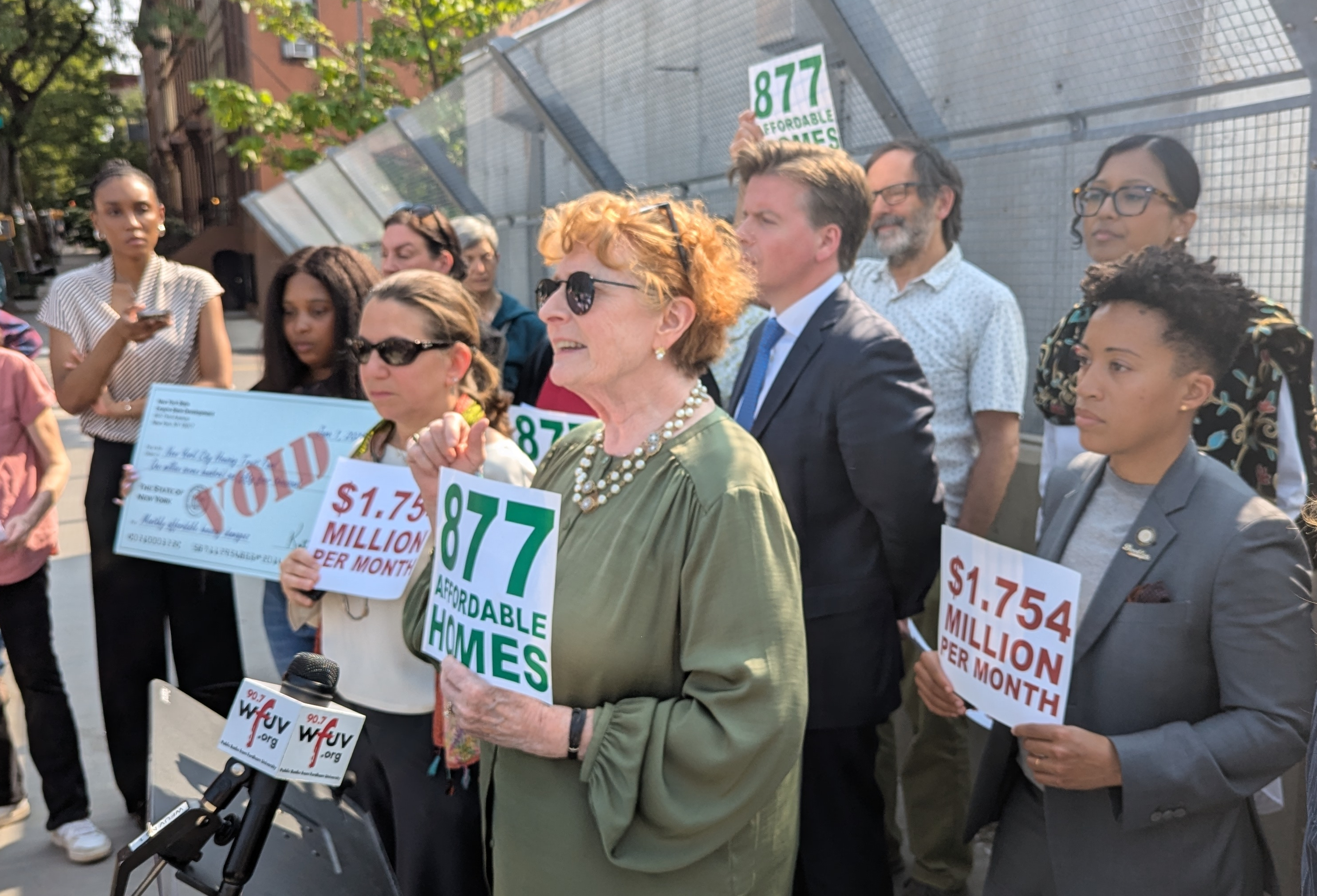
BROOKLYN, NY, June 3, 2025: Eleven years after local organizations in the BrooklynSpeaks coalition won a settlement with New York State Empire State Development to require 2,250 affordable apartments at Atlantic Yards be completed by May 2025, community leaders and elected officials called upon Governor Kathy Hochul to fulfill the agency’s pledge to collect liquidated damages for apartments the project has failed to deliver.
When the Atlantic Yards project was announced in December 2003, its 2,250 promised affordable apartments were seen as a solution to a burgeoning housing crisis in Brooklyn. By building platforms over rail yards along Atlantic Avenue, the project would remove blight and connect neighborhoods by creating new open space and high rise apartment towers. Twenty years later, the platforms haven’t been started, and neither have a remaining 877 affordable apartments. The $2,000 per month charge for each unfinished apartment agreed upon in the 2014 settlement means ESD must collect $1,754,000 each month from developer Greenland USA beginning in June. The funds are to be used by the City of New York to create and preserve affordable housing in the neighborhoods surrounding the project.
“ESD has allowed the Atlantic Yards developers to delay the costliest parts of the project–deeply affordable apartments and platforms over the rail yards–until the last possible moment,” said Michelle de la Uz, Executive Director of the Fifth Avenue Committee. “In the meantime, rising housing costs have pushed out thousands of low-income households out of the surrounding neighborhoods. The Governor has a responsibility to ensure her agency fulfills its commitment to address the housing crisis in Brooklyn.”
On the 20th anniversary of the chronically delayed Atlantic Yards project, developer defaults on its bonds
Submitted by brooklynspeaks on December 11, 2023 - 12:49pm
Related Terms :
Advocates and Elected Officials Call for Accountability and Change in Oversight